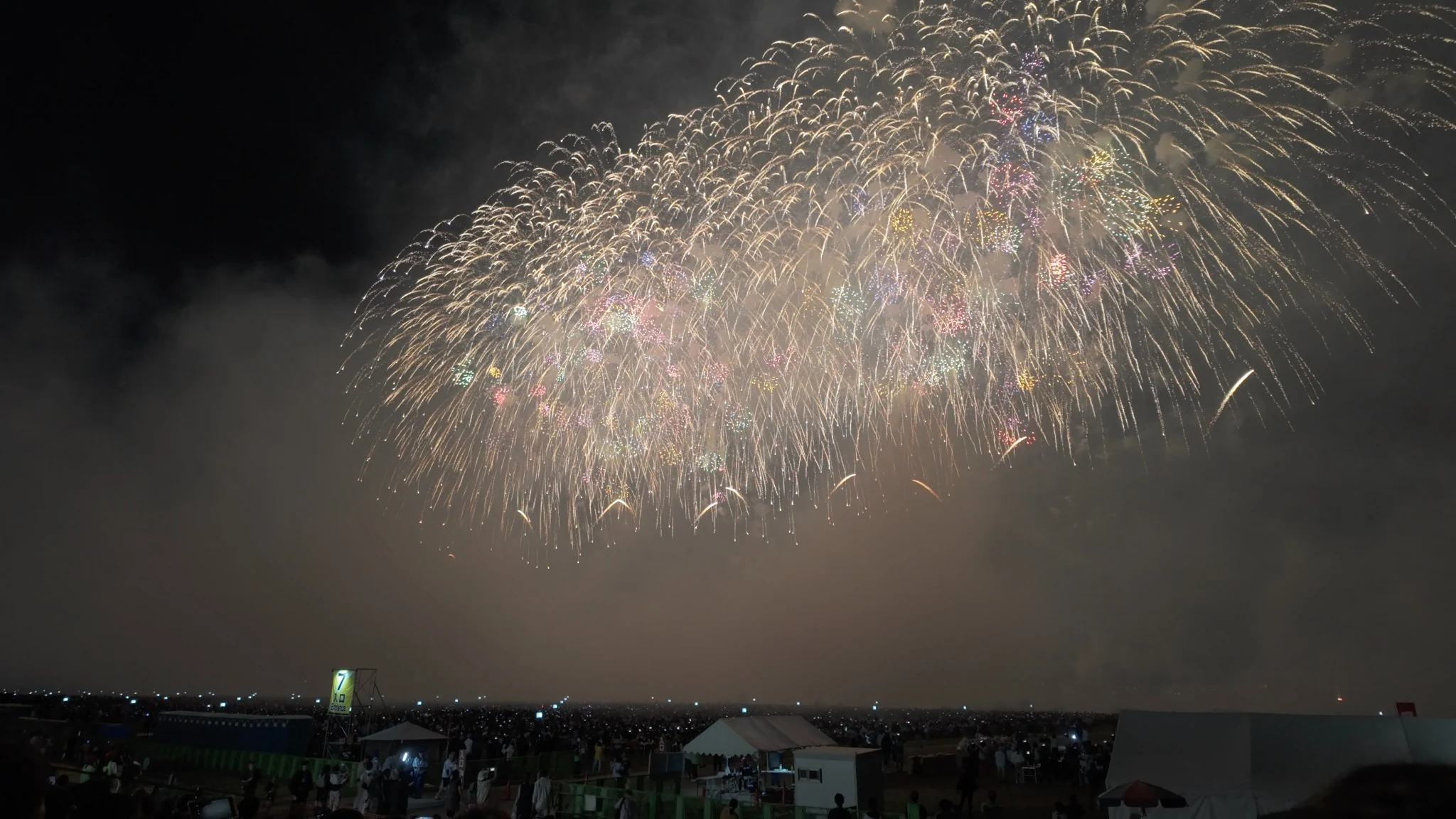
By the time August 29 arrived, I was almost tired of checking the weather. For about two weeks I had been opening the forecast again and again, watching every change and wondering whether one of Japan's biggest fireworks nights would disappear behind rain or cloud. In the end, the weather turned out beautifully. A local friend who watched nearby told me it was one of the best conditions they had seen in recent years.
A short trip built around one night
I started this trip from Fukushima for personal reasons rather than from Tokyo. The day before the fireworks, I drove north and stayed at Ryokan Onuma in Higashi-Naruko Onsen. The next morning I continued through Onikobe, Yuzawa and Yokote before reaching Kakunodate around lunchtime.
Kakunodate became our base for the event. I had previously spent a month there during my medical training, and I was fortunate to have a local connection who could host us for the night. That mattered more than I had expected: accommodation around Omagari was already extremely difficult to find.
Fukushima → Higashi-Naruko Onsen
I left Fukushima in the afternoon and spent the first evening at Ryokan Onuma, with dinner and time in the onsen before the longer drive north the next morning.
Kakunodate → Omagari → fireworks
After arriving in Kakunodate around midday, we left the car there and took the train to Omagari. From Omagari Station, the walk to the riverside venue took about 30 minutes. Food stalls lined the route, so we picked up miso-tanpo, fried chicken and beer on the way.
Daytime fireworks began at 5:10 p.m.; the evening competition started at 7:00 p.m. and continued until around 9:30 p.m.
Kakunodate → Tendo → Yonezawa
After a slow morning in Kakunodate, I drove back south, stopping around Tendo and Yonezawa on the way. The fireworks were the clear centre of the trip; the rest of the route simply gave the weekend a little more breathing room.
The ticket was not the hardest part
We watched from a Dike Box seat in Block 18. The box cost ¥30,000 for four people, plus roughly ¥1,000 in ticketing fees. I bought it soon after general sales opened. The more expensive table seats disappeared quickly, while the Dike Box seats still seemed to have some availability for a few days.
I was happy with the choice. The seats are built into the slope of the riverbank, so the view naturally opens toward the entire launch area. We did not have a table, but the four of us — my wife, two friends and me — had enough space and could watch the whole field comfortably. If I went again, I would bring a cushion: sitting on the ground for several hours is much easier with one.
The official price for a four-person Dike Box was ¥30,000. Ticket types and prices can change each year, so future visitors should check the current official event information.
Accommodation and transport were the real challenge
Finding a place to sleep was much harder than buying the seat. By the time I was planning seriously, accommodation around Omagari was essentially unavailable. I was unusually lucky because of my previous connection to Kakunodate; it is not a strategy most visitors can reproduce.
The train was no easier. I tried to reserve the shinkansen as soon as bookings opened one month before departure, at 10 a.m., but could not get the seats I wanted. That was why I ultimately chose to drive from Fukushima, leave the car in Kakunodate, and use the local railway for the final section to Omagari.
If I were planning the trip without local connections, I would treat accommodation and transport as the first priorities — not an afterthought once the fireworks ticket is secured.
Daytime fireworks: smoke instead of light
Before this trip, I had never thought much about daytime fireworks. At Omagari, the afternoon competition is not about bright explosions against a dark sky. Coloured smoke is launched into the evening light, and the shape, colour and way it changes in the air become the performance.
It cannot match the night fireworks for sheer impact, but I enjoyed watching the colours spread and slowly bleed into the evening sky. There was something quiet and almost old-fashioned about it — a very different kind of beauty from the explosions that came later. According to the official event, Omagari is currently the only competitive daytime-fireworks event in Japan. In 2026, the daytime competition ran from 5:10 to 6:00 p.m., before an hour-long break leading into the night programme.
The hour before the night programme was also one of the most comfortable parts of the day. We sat by the river with the food we had bought on the walk from the station. A few drops of rain briefly made me nervous after all those days of checking the forecast, but they disappeared almost immediately. The temperature was mild enough for a T-shirt, with a light extra layer useful once the evening cooled.
Then 7 p.m. arrived
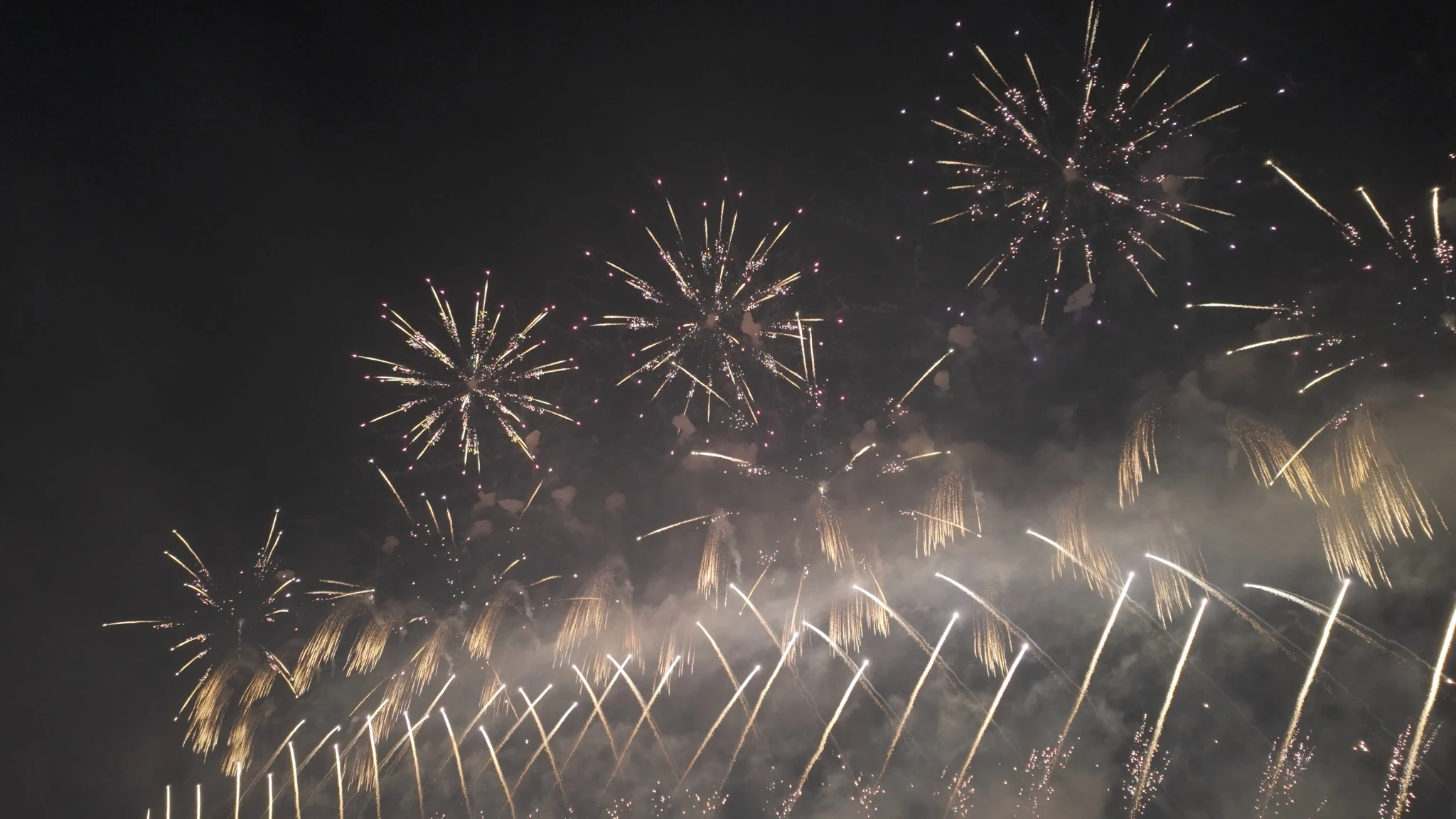
The night fireworks began at 7 p.m., and there was no slow build-up. The first thing that surprised me was not simply the size of the fireworks but the physical force of them. The sound travelled through my whole body in a way I had never experienced at a fireworks display before.
There was also the smell of smoke, the cool breeze coming off the river and the scale of the sky above us. Today it is easy to watch spectacular fireworks on YouTube, and the videos from Omagari are genuinely impressive. But being there made me realise how incomplete a screen is. The experience belonged to all five senses at once.
This is a competition rather than a single choreographed show. In 2026, 28 pyrotechnic companies took part, with roughly 18,000 fireworks across the full programme. Each competitor presents traditional large shells as well as a creative sequence built around its own theme. I expected to enjoy the spectacle; I did not expect to stay this absorbed for more than two hours.
The piece that stayed with me
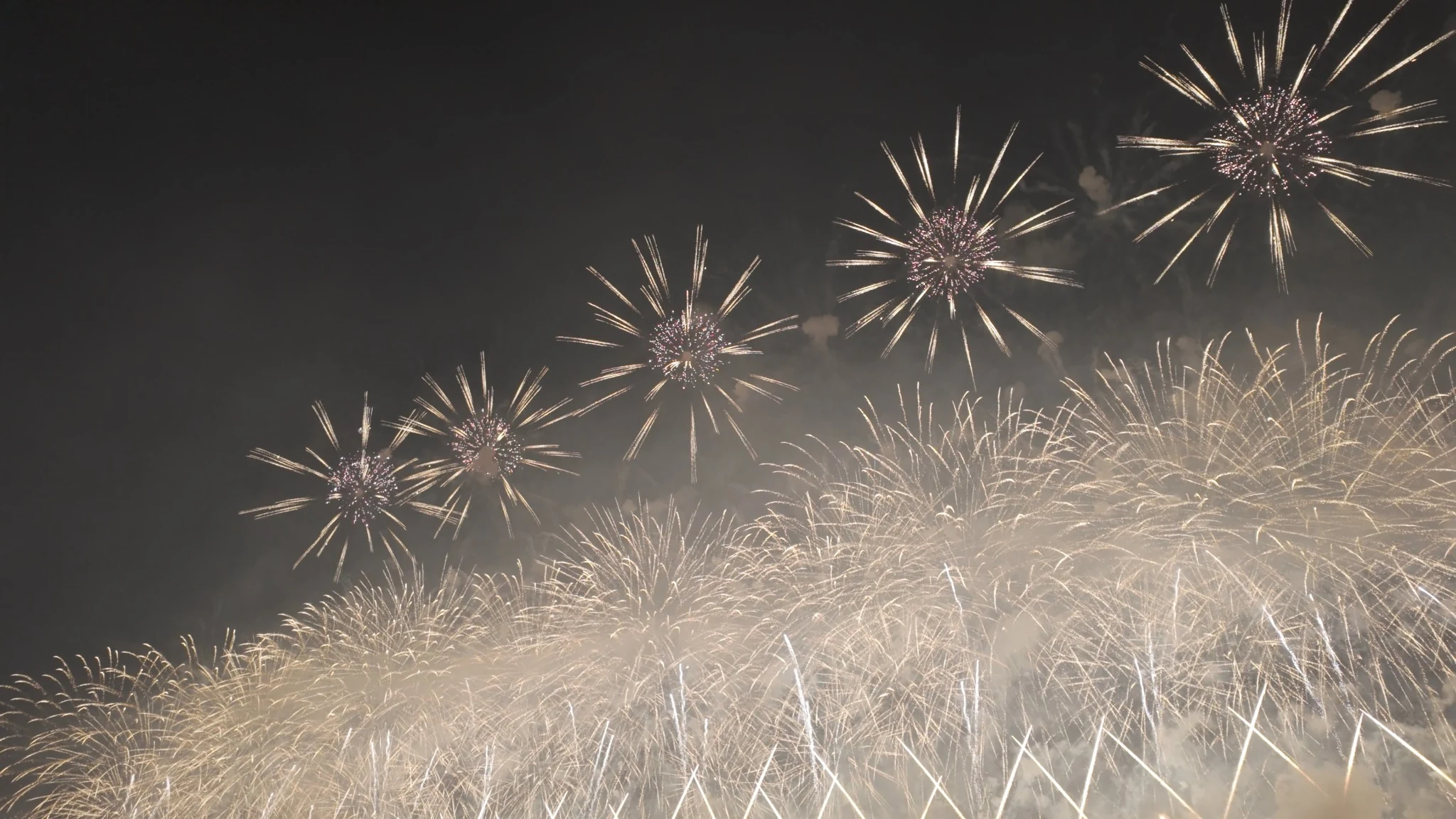
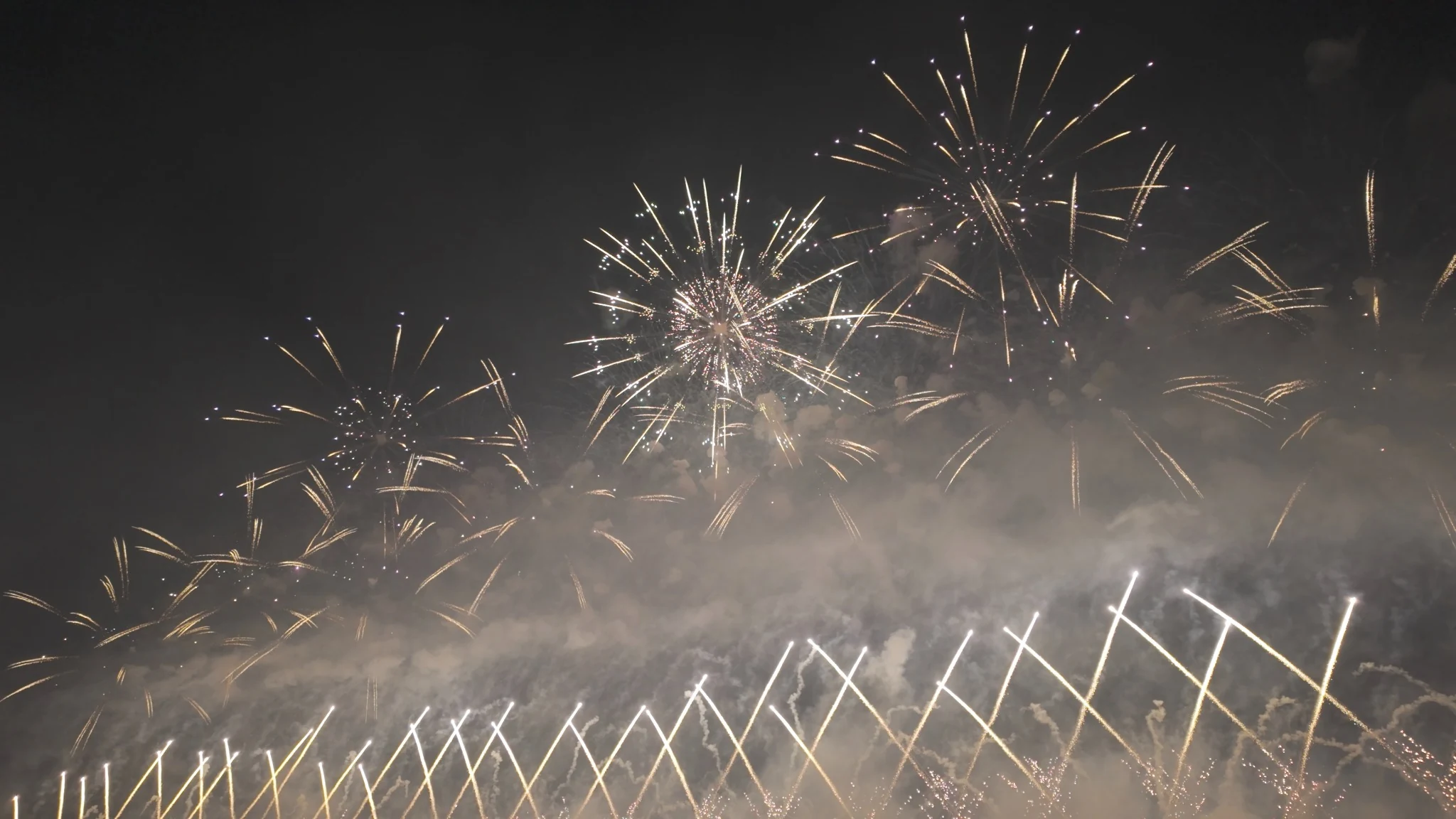
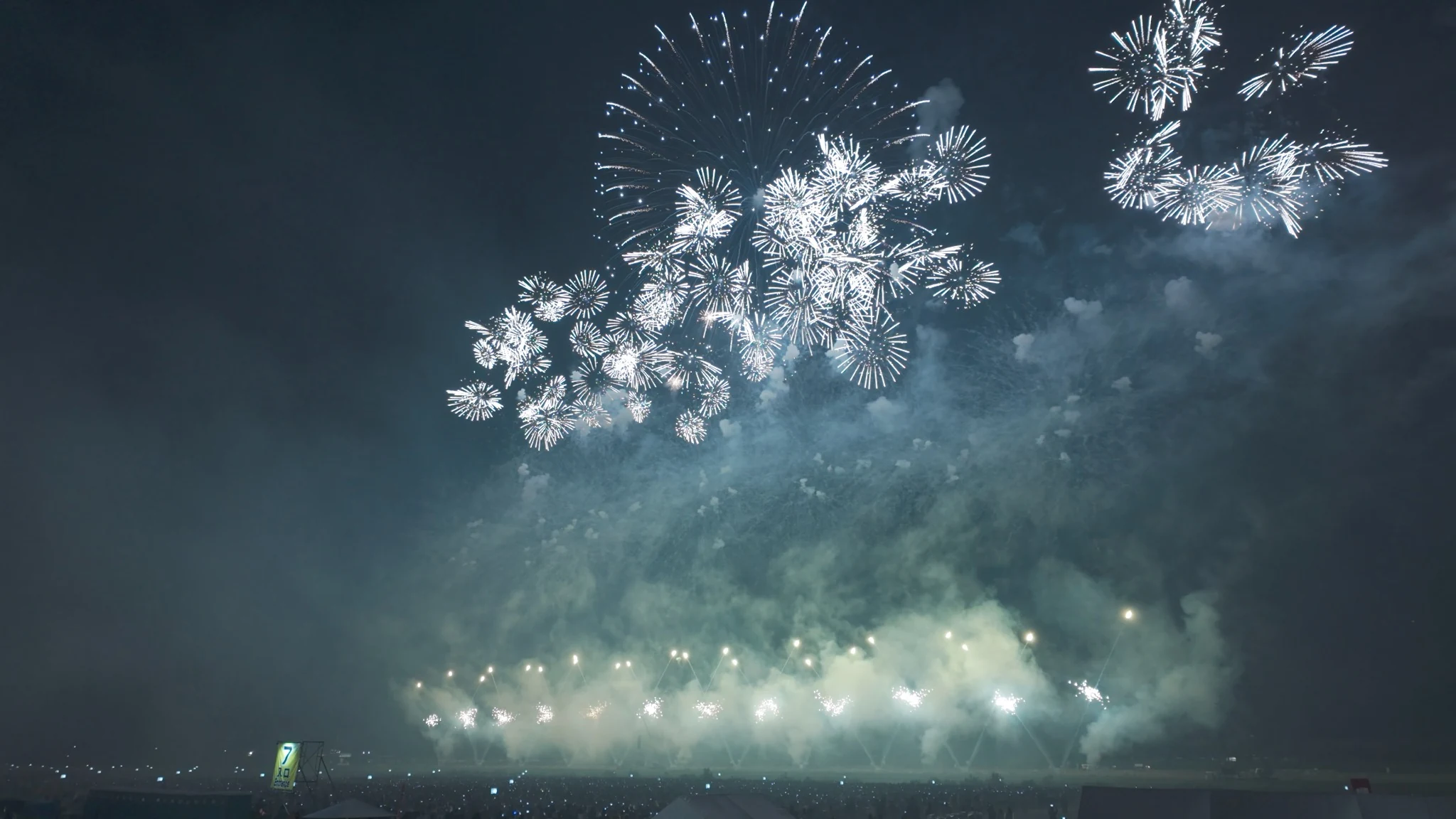
The two large set pieces in my own videos were among the obvious highlights of the night, but what I remember most clearly was one of the competitive creative-fireworks entries. Kita-Nihon Hanabi Kogyo paired its work with music by Ryuichi Sakamoto. The fireworks felt less like a sequence of explosions and more like a piece of visual art unfolding in time.
It moved me partly because it could exist only for those few minutes. There is no way to pause a firework in the sky or return to exactly the same moment. The image forms, changes and disappears. That sense of impermanence made the music and the fireworks feel even more powerful. The piece later won the creative-fireworks division.
Two short clips from the night
Still photos do not really capture how large the display feels from the riverbank, so I uploaded two short clips from my DJI Pocket 3. The sound is part of the experience — headphones help.
The crowded trip back to Kakunodate
When the fireworks ended, the quiet part of the night was over. We walked quickly back toward Omagari Station with everyone else. The crowd itself was manageable — in my experience, less overwhelming than leaving Tokyo's Sumida River Fireworks Festival — but Omagari Station is small for the number of people trying to enter at once. We had to queue outside before being allowed into the station.
We eventually boarded one of the late local trains to Kakunodate. It was packed and, as I remember it, roughly 15 minutes late. After the quality of the fireworks, though, the journey back felt like a fair price to pay.
Would I go again?
Yes. But I would plan the logistics before almost anything else. The fireworks ticket itself was manageable; accommodation and transport were the real bottlenecks. I would also keep an eye on the forecast — just perhaps not quite as obsessively as I did this time.
What stayed with me was not just the size of the fireworks. It was the sound in my chest, the smell of smoke, the river breeze, and a few minutes of music and light that disappeared as soon as they were created. The entire trip had been organized around a single evening, and for once the weather, the seat and the timing all came together. After two weeks of staring at forecasts, that felt unusually satisfying.
Une soirée à Omagari
En août 2026, je suis allé à Omagari, dans la préfecture d’Akita, pour assister au grand concours national de feux d’artifice. Pendant près de deux semaines, j’ai suivi la météo avec inquiétude, mais le soir du spectacle les conditions étaient presque parfaites. Ce qui m’a le plus marqué n’était pas seulement la taille des feux : le son se ressentait dans tout le corps, avec l’odeur de la fumée et le vent venant de la rivière. J’ai aussi découvert les feux d’artifice de jour, où les couleurs de la fumée se diffusent lentement dans le ciel. Le retour en train vers Kakunodate était très chargé, mais le spectacle avait largement mérité cet effort.